

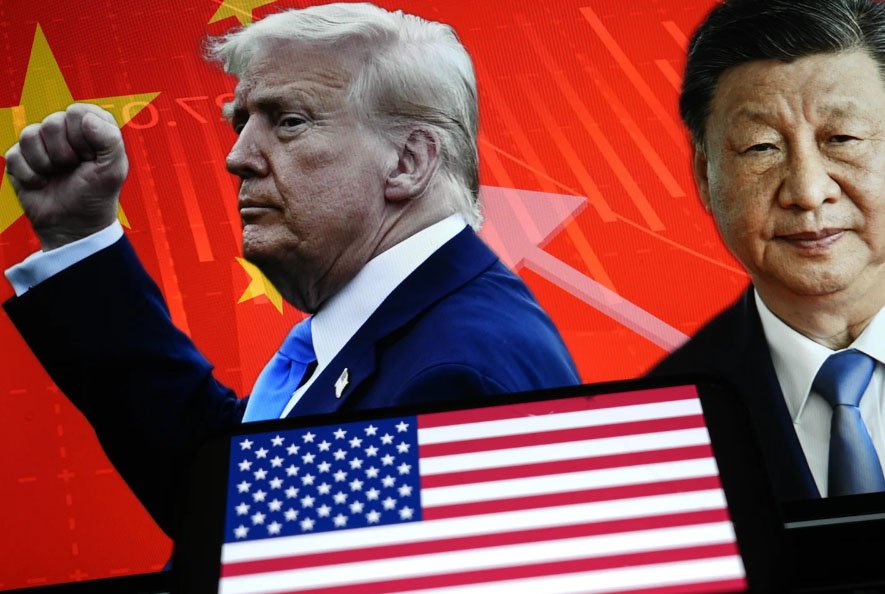
Former U.S. President Donald Trump has reignited tensions between the United States and China by announcing sweeping new tariffs and potential technology export restrictions. Starting November 1, all Chinese imports could face a 100% tariff, doubling the current rate on most categories.
Trump’s Announcement
- In a fiery statement on his social media platform, Trump said the U.S. will impose “an additional 100% tariff” on all Chinese goods to protect American industries and punish what he described as “China’s unfair trade practices.”
- He also hinted at new restrictions on critical software exports, suggesting the U.S. could tighten control over technologies deemed vital to national security, including artificial intelligence, chip design tools, and cybersecurity systems.
- Trump claimed that these measures were necessary following China’s recent move to restrict exports of rare earth minerals key components used in semiconductors, defense equipment, and renewable energy technologies. He called Beijing’s actions “shockingly hostile” and warned of “massive retaliation.”
Market and Global Reactions
The announcement rattled global markets, particularly the technology and manufacturing sectors. U.S. stock indices dropped sharply, with tech giants and hardware manufacturers reporting immediate dips in pre-market trading.
Analysts cautioned that the move could:
- Further inflate prices for U.S. consumers.
- Disrupt supply chains dependent on Chinese components.
- Trigger retaliatory tariffs from Beijing.
Global investors fear the return of a full-scale trade war, reminiscent of the 2018–2020 standoff that strained international commerce.
Why Rare Earths and Tech Controls Matter
Rare earth minerals are vital for the production of electronics, electric vehicles, missiles, and wind turbines. China currently controls around 70 to 80% of global rare earth processing.
By curbing exports of these materials, China has put pressure on the U.S. technology supply chain prompting Trump’s government to consider broader tech export controls and reciprocal tariffs.
The proposed export restrictions could mean U.S. firms will require special licenses to sell critical software and AI tools to Chinese companies, potentially hitting big tech suppliers and semiconductor design firms.
Risks and Global Impact
- U.S. China Relations: The announcement effectively resets trade diplomacy, reducing hopes for any near-term negotiations.
- Industry Shockwaves: American manufacturers relying on Chinese inputs from electronics to solar equipment face supply delays and cost spikes.
- Inflation Concerns: Economists warn that the tariffs could raise prices for consumer goods in the U.S., from smartphones to appliances.
- Potential Chinese Retaliation: Experts expect Beijing to respond with new tariffs or restrictions on U.S. companies operating in China.
The Bottom Line
Trump’s tariff declaration signals a major escalation in the U.S.–China economic rivalry extending the battle from trade to technology dominance. As the November 1 deadline approaches, global markets, businesses, and governments are bracing for potential ripple effects across industries.
Whether the move strengthens U.S. competitiveness or reignites a damaging trade war remains to be seen but one thing is certain: the world economy is watching closely.