
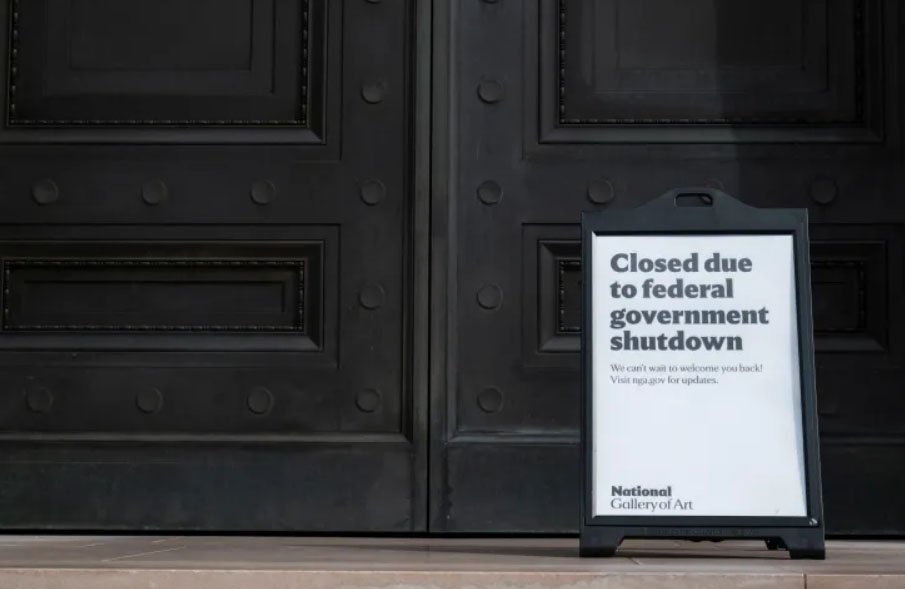
As the federal government shutdown enters its second week, a controversial internal memo has stirred alarm: the Trump administration is questioning whether furloughed federal employees will be guaranteed retroactive pay once the shutdown ends.
What the Memo Says
- A draft legal opinion circulated by the Office of Management and Budget (OMB) argues that the Government Employee Fair Treatment Act of 2019 does not automatically entitle furloughed workers to back pay. Instead, the memo says that Congress must explicitly appropriate funds for such payments in any package that ends the shutdown.
- The memo emphasizes that while the 2019 law states furloughed and excepted employees “shall be paid” after a lapse in appropriations, that requirement is “subject to the enactment of appropriations Acts ending the lapse.” In OMB’s view, this clause means pay is not legally mandatory unless Congress acts.
- This reinterpretation marks a significant departure from prior understanding for years, federal workers and many in government believed that back pay following shutdowns was a settled norm.
Reactions, Pushback & Legal Stakes
The move has triggered strong backlash from lawmakers across the political spectrum. Many Democrats assert that the law clearly mandates back pay and cannot be overridden by a policy memo.
Several legal experts and labor advocates say the memo’s argument is a narrow, flawed reading of the statute. They point out that the 2019 law was enacted precisely to ensure that employees would not suffer financially due to partisan standoffs.
The Office of Personnel Management (OPM), which administers federal HR policy, continues to reference the 2019 law in its guidance, maintaining that employees “shall be paid” once appropriations are restored.
Republican leaders are divided: some align with the administration’s interpretation, while others maintain that back pay is owed under current law and should not be subject to reinterpretation.
What This Means for Federal Employees
Up to 750,000 federal workers (or more) may be affected by this dispute. These include those placed on furlough temporarily sent home without work during the shutdown.
Essential workers who continue working without pay like military personnel, air traffic controllers, and public safety officials face uncertainty too, although past practice often ensures they receive pay retroactively.
Meanwhile, agencies are now scrambling to issue furlough notices and adjust staffing. The Internal Revenue Service (IRS), for example, announced that most of its operations would be suspended, and that many staff would be furloughed though its internal notices still affirm that back pay is expected when shutdowns end.
Political & Budget Deadlock
The standoff in Congress continues. The Trump administration is reportedly using this new interpretation as leverage in negotiations, arguing that workers may not be made whole unless certain budget provisions are accepted.
Democrats demand additional funding for healthcare programs and other priorities; Republicans insist any deal must be “clean” without extra spending.
Legal & Historical Context
Before 2019, there was no statutory guarantee of back pay in shutdowns funding bills passed after each shutdown often included retroactive pay provisions for federal workers.
In 2019, Congress overwhelmingly passed the Government Employee Fair Treatment Act, signed by then President Trump, to codify that both furloughed and excepted employees should be paid after a shutdown.
The current memo challenges long-standing interpretation of that law making this a constitutional, statutory, and political battle.