

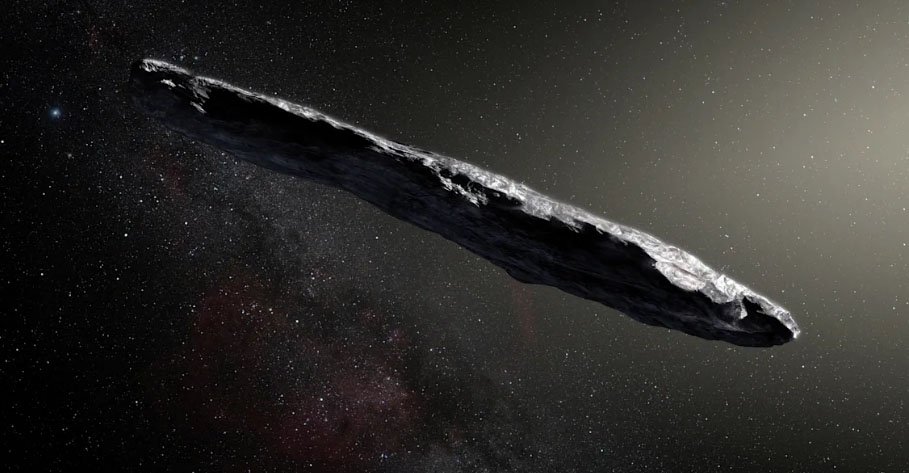
What Is 3I/ATLAS?
3I/ATLAS is an interstellar object only the third one ever confirmed that entered our Solar System from deep space. It was discovered on July 1, 2025, by the Asteroid Terrestrial impact Last Alert System (ATLAS) in Chile. Initially believed to be an ordinary comet, its unusual behavior and composition quickly made it one of the most talked-about space discoveries of the year.
NASA’s Hubble and James Webb Space Telescopes have captured rare images of 3I/ATLAS, showing a large dust coma and extremely high carbon-dioxide levels far more than typical comets found within our Solar System.
Why Some Believe NASA Is Hiding Something
Despite NASA’s official updates, growing voices within the scientific and public communities believe that certain key data about 3I/ATLAS has not been shared openly.
Main reasons for suspicion include:
- Unusual chemical composition: Observations suggest the object emits metal compounds and gases never before detected in known comets.
- Strange flight path: 3I/ATLAS is following a hyperbolic trajectory, meaning it is not bound by the Sun’s gravity and originated from beyond our Solar System.
- Restricted data: Some reports indicate that raw telescope images and analysis results are yet to be released publicly.
- Alarming statements: A few astronomers have made cryptic comments about potential “cosmic events” around October 29, fueling speculation of something bigger being kept quiet.
Secrets and Predictions Surrounding 3I/ATLAS
- Possible Artificial Origin: Some researchers believe 3I/ATLAS could be a probe or relic from an advanced civilization, given its metallic composition and controlled looking movement.
- Potential Interaction with Spacecraft: The object’s path may pass near planetary orbits, possibly crossing regions where space probes are operating.
- Oldest Object Ever Studied: Its chemical structure may provide clues to how other planetary systems formed billions of years ago.
- Planetary Defense Lessons: The object reminds scientists of the importance of detecting and tracking such visitors early.
What NASA Confirms So Far
- 3I/ATLAS poses no threat to Earth.
- Its closest distance to the Sun is around 1.4 AU (about 210 million km).
- It will pass roughly 270 million km from Earth far beyond the Moon’s orbit.
- It contains an unusually high carbon dioxide ratio, indicating it was born in an environment far colder and darker than our Solar System.
- Global observatories continue to track and study the object’s chemical and physical properties.
Why It Matters to Humanity
3I/ATLAS challenges everything we know about the universe. Its discovery proves that our Solar System is not isolated foreign visitors can enter and leave at any time. This raises several key questions:
- Could there be more interstellar travelers that we’ve yet to detect?
- Do they carry the building blocks of life?
- What if some are artificial in origin?
The debate over NASA’s transparency highlights a growing demand for open data in astronomy. Humanity’s curiosity about cosmic visitors is natural but truth and clarity must accompany discovery.
Final Thought
3I/ATLAS reminds us that the universe is vast, mysterious, and full of visitors from distant realms. Whether it’s a natural body or something created by intelligence beyond Earth, it pushes science — and imagination — to new limits. The real challenge for humanity is to study, understand, and stay open to truths that may forever change our view of the cosmos.