
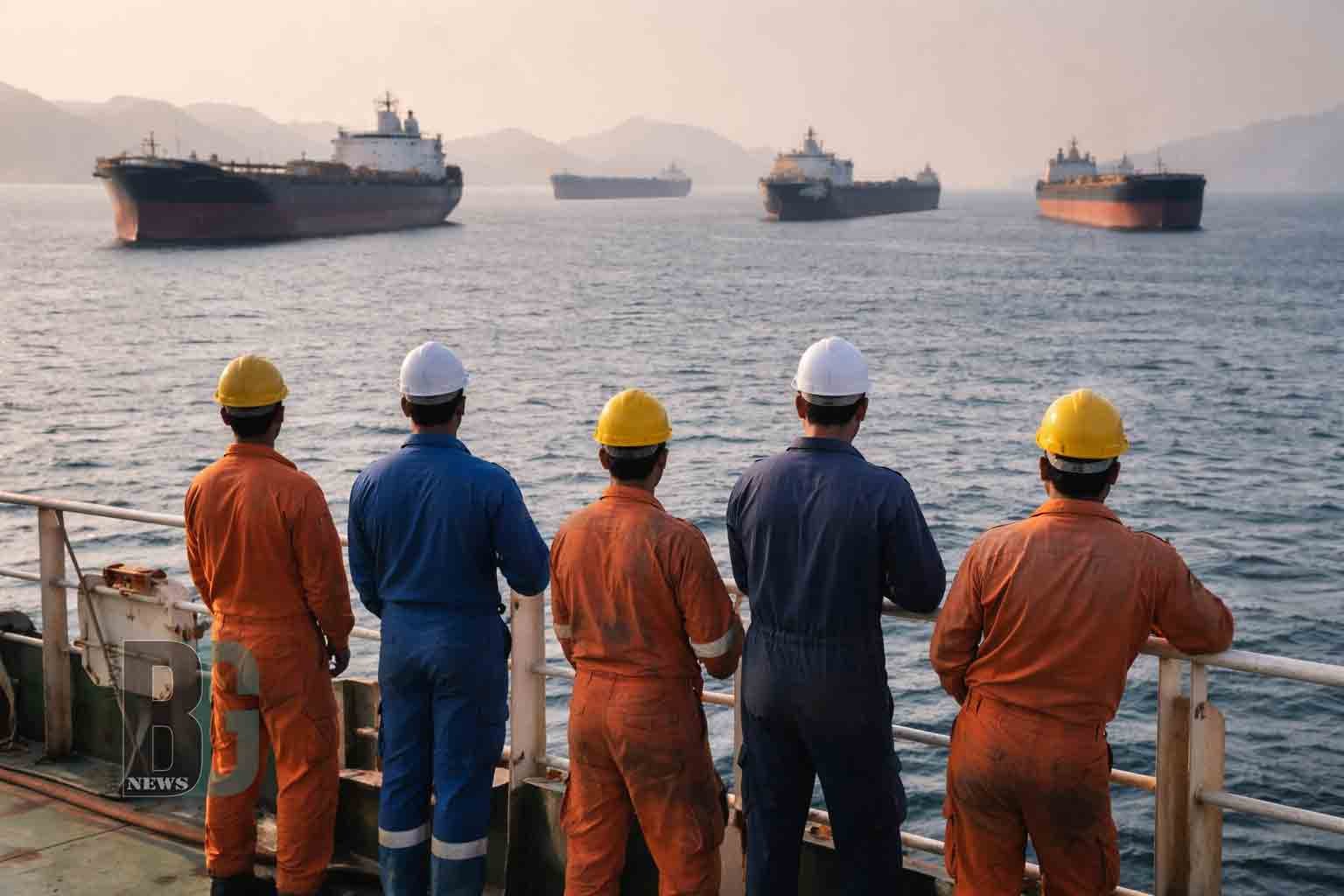
Around 20,000 Indian seafarers are currently stranded in the Strait of Hormuz as escalating regional tensions continue to disrupt maritime operations, raising serious humanitarian concerns.
According to the National Union of Seafarers of India, sailors aboard multiple vessels are unable to leave the area due to increasing security risks and restrictions on ship movement. The situation has worsened in recent days, with reports indicating that navigation through the Strait has become highly unsafe.
Union officials have warned that many stranded sailors are facing deteriorating living conditions, including shortages of food, clean drinking water, and medical supplies. Crews onboard several ships are said to be under growing stress as uncertainty over evacuation or safe passage continues.
The Strait of Hormuz is one of the world’s most critical oil transit routes, and any disruption in the region has a significant impact on global shipping and energy supply chains. Ongoing tensions involving regional and global powers have led to heightened threats to vessels, forcing many ships to remain in place.
The crisis is not limited to Indian sailors alone, as seafarers from other countries are also affected. However, the large number of Indian crew members has drawn particular concern from maritime unions and authorities.
Officials have urged the government to take immediate steps to ensure the safety of those stranded, including arranging essential supplies and exploring options for safe evacuation if the situation continues to deteriorate.
The unfolding situation highlights a growing humanitarian challenge at sea, as thousands of sailors remain stuck in a volatile region with limited resources and uncertain prospects for relief.